Trust Before Collateral: How Americans With Finance Backgrounds Are Reviving Rural Japan's Informal Lending Traditions
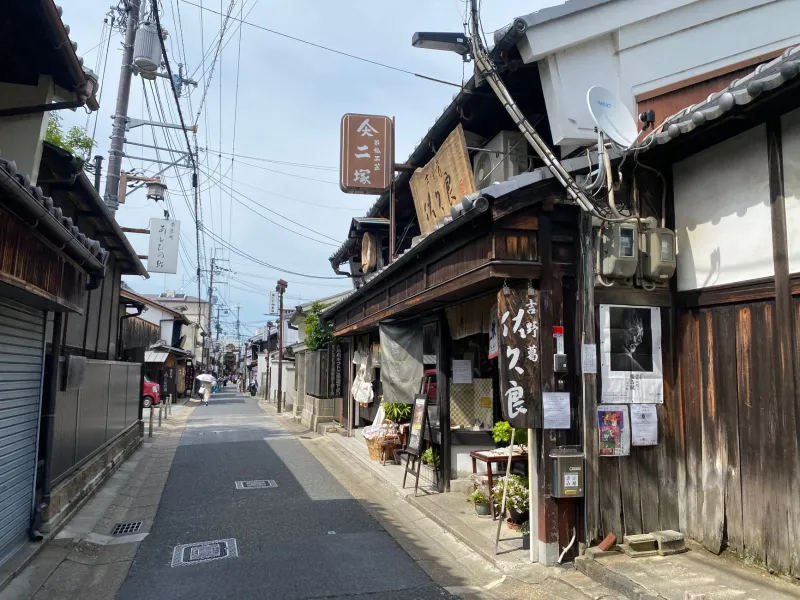
In a modest office above a rice merchant's storefront in Niigata Prefecture, a former Chicago credit analyst named David Hargrove spends his Tuesday mornings reviewing loan applications — not for a bank, but for a community lending circle he helped organize alongside a local agricultural cooperative. The paperwork is minimal. The collateral requirements are, by Western standards, almost nonexistent. What matters most is something that does not translate neatly into a spreadsheet: kōjin-shin, or personal trust.
"The first thing I had to unlearn," Hargrove says, "was that creditworthiness and documentation are the same thing. Here, they're not."
His experience is not unique. Across rural Japan — in the farming towns of Akita, the fishing villages of Kochi, and the mountain communities of Nagano — a quiet financial experiment is taking shape. A small but growing number of American expats with backgrounds in banking, microfinance, and community development are finding that Japan's countryside offers something unexpected: a centuries-old tradition of informal, relationship-based lending that is structurally compatible with modern impact finance principles, yet has been largely abandoned by the country's mainstream financial institutions.
The Capital Desert in Japan's Countryside
Japan's regional economies face a compounding problem. As younger residents migrate to urban centers, the tax base shrinks, local businesses struggle to find successors, and commercial banks — already cautious by institutional temperament — have become even more reluctant to extend credit in areas they classify as high-risk due to demographic decline.
For a farmer seeking funds to upgrade irrigation equipment, or a small-town confectioner hoping to modernize a production line, the options are stark. Government-backed loan programs exist but carry bureaucratic requirements that can take months to navigate. Regional credit unions, known as shinkin banks, remain an option in some areas, though their lending criteria have tightened considerably in recent years. Informal borrowing from family networks, once a reliable backstop, has eroded as multigenerational households become less common.
The result is what economists who study rural Japan have begun calling a "capital desert" — a landscape where viable small enterprises cannot access the modest sums of money they need to survive, let alone grow.
Reading the Old Ledgers
What many incoming American finance professionals discover, often through conversations with elderly community members or local historians, is that rural Japan once had a sophisticated answer to this problem. The mujin — a rotating credit association in which members contributed fixed amounts into a communal pool and took turns accessing lump-sum payouts — was a cornerstone of small-town commerce for centuries. Similar systems, known variously as tanomoshi-kō depending on the region, operated on the premise that social accountability among neighbors was a more reliable guarantee of repayment than any legal instrument.
These systems did not disappear entirely. They retreated. And for Americans trained in community development finance or cooperative economics, the structural logic is immediately recognizable — akin to the rotating savings and credit associations documented in immigrant communities across the United States, from Korean gye circles in Los Angeles to West African susu networks in New York.
"When I read about mujin, I thought: this is basically what CDFI [Community Development Financial Institution] theory has been trying to reconstruct for decades," says Priya Nambiar, a former microfinance consultant from Portland who now lives in rural Shimane Prefecture. "The difference is that Japan already has the cultural memory of it. You don't have to build the trust infrastructure from scratch. You just have to help people remember it's there."
The American Value-Add: Transparency Without Bureaucracy
The role that Americans like Hargrove and Nambiar are carving out is not that of a lender imposing Western financial models on a resistant community. Rather, it is something more nuanced: a translational function that brings structural clarity and documented accountability to lending relationships that previously operated entirely on verbal agreement and social pressure.
In practice, this means drafting simple, plain-language loan agreements that satisfy both the borrower's expectation of relational trust and the lender's need for a written record. It means introducing basic interest-rate transparency so that all parties understand the cost of capital. And it means establishing modest reporting mechanisms — a monthly one-page summary, for instance — that allow community lending circles to track their portfolio health without replicating the administrative burden of institutional banking.
"The locals aren't opposed to documentation," Hargrove explains. "They're opposed to documentation that feels like distrust. So the framing matters enormously. You present the paperwork as something that protects both sides, not as something that signals you don't believe them."
This cultural calibration requires genuine immersion. Americans who have attempted to introduce financial tools without first earning community standing — by participating in local festivals, learning conversational Japanese, and demonstrating long-term commitment to the area — have found their efforts met with polite indifference. The kōjin-shin tradition, after all, is premised on the idea that you must know someone before you can trust them. A foreigner who arrives with a business plan but without relationships has, by local logic, skipped the most important step.
Opportunities for American Expats With Financial Backgrounds
For Americans considering a move to rural Japan who hold credentials in finance, accounting, cooperative management, or community development, the opportunity landscape is meaningful — though it demands patience and humility.
Some expats have formalized their roles by partnering with local NPO (nonprofit) organizations or agricultural cooperatives, offering financial advisory services on a part-time or volunteer basis while building the community relationships needed to eventually launch independent lending initiatives. Others have registered as sole proprietors offering bookkeeping and financial literacy workshops, which serve as both a revenue stream and a trust-building mechanism.
The regulatory environment for informal lending in Japan is nuanced. The Money Lending Business Act (kashikin gyōhō) governs registered moneylenders, and Americans operating in this space should seek legal counsel before structuring any arrangement that could be construed as commercial lending. However, facilitating community-organized rotating credit associations — where participants are lending to one another rather than receiving loans from a single creditor — typically falls outside the act's scope, making the mujin-style model particularly attractive from a compliance standpoint.
A Model Worth Watching
The broader significance of what these American expats are doing extends beyond individual loan transactions. In regions where municipal governments are actively recruiting new residents and businesses to offset population decline, a functioning community lending infrastructure can be a decisive factor in whether a small enterprise survives a difficult season or closes permanently.
Local officials in several prefectures have begun taking notice. A handful of regional revitalization offices (chiiki sōsei kyoku) have quietly reached out to expat-led lending initiatives, exploring whether their models could be formalized into publicly supported microloan programs.
For Americans who came to rural Japan seeking a different kind of professional life — one grounded in relationships rather than quarterly targets — that recognition carries its own reward. "I spent fifteen years optimizing loan portfolios for people I never met," Hargrove reflects. "Now I know every person I lend to by name. I've eaten dinner in their homes. That's not a lesser form of finance. It might actually be a better one."