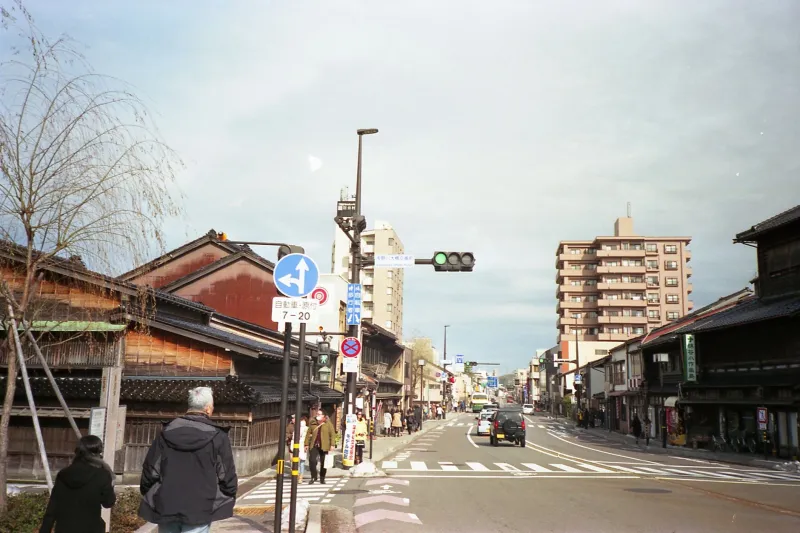
Three Generations Under One Roof: How American Families Are Building New Lives Together in Rural Japan
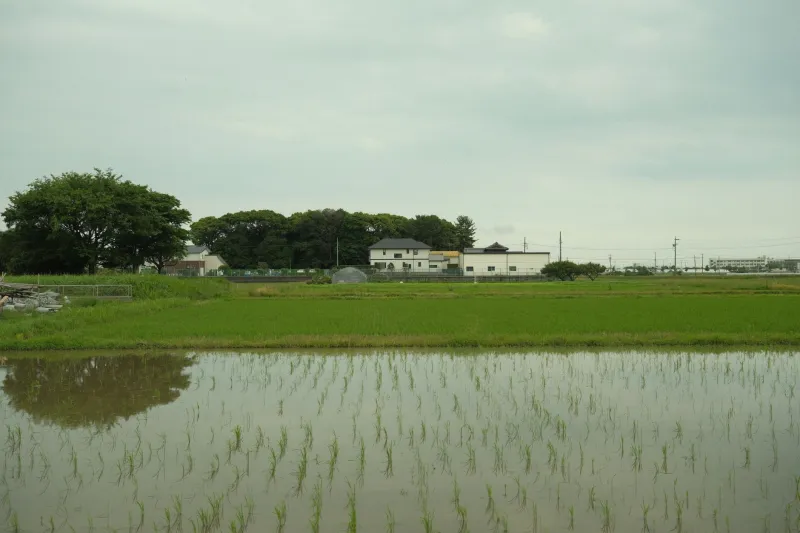
For most Americans, the idea of grandparents, adult children, and grandchildren sharing a home conjures images of cramped suburban arrangements born of financial necessity. But a quiet shift is underway in Japan's depopulating countryside, where multigenerational American families are arriving not out of desperation, but by deliberate design — and finding that rural Japan may be one of the few places left in the world where this kind of living arrangement genuinely thrives.
The draw is practical as much as it is emotional. Sprawling traditional farmhouses, known as minka, are available in many rural prefectures for prices that would not cover a modest down payment in most American cities. Local governments in towns losing residents to urban migration have created subsidy programs that make renovation costs manageable. And Japan's deeply ingrained culture of intergenerational respect means that a household spanning three generations is not unusual — it is, in many communities, the expected and honored norm.
Understanding the Visa Landscape
Perhaps the most common question American families ask before pursuing this arrangement concerns immigration status. Japan does not currently offer a dedicated "family reunion" visa equivalent to those found in some other countries, and there is no single pathway that allows grandparents, parents, and children to arrive and remain together under one application.
That said, practical routes do exist. Adult children who qualify for a working visa — including the increasingly popular Specified Skilled Worker or Engineer/Specialist in Humanities categories — can then apply to bring a spouse and minor children as dependents. Grandparents present a more complex scenario. Retired Americans in their sixties and beyond may pursue a long-term stay through a Cultural Activities visa if they are engaged in legitimate study or practice of a Japanese art form, or through successive Tourist visas with periodic returns to the United States, though the latter carries inherent limitations.
The most durable solution for grandparents seeking genuine long-term residency is often the Investor/Business Manager visa, available to those who establish or invest in a qualifying Japanese business — a pathway that several rural municipalities have actively encouraged by streamlining registration requirements for foreign-owned enterprises. Families who consult with an immigration attorney before relocating consistently report smoother outcomes than those who attempt to navigate the system independently.
Housing That Accommodates Everyone
One of rural Japan's most compelling advantages for multigenerational families is the sheer scale of available housing. Traditional farmhouses built to accommodate extended family networks frequently include multiple sleeping areas, dedicated rooms for elderly relatives, and separate entrances that offer privacy without physical separation. These structures, often listed through municipal akiya (vacant home) registries at nominal prices, can be renovated to accommodate accessibility needs — a genuine concern for older family members.
Several prefectures, including Shimane, Tottori, and Akita, offer renovation subsidies specifically tied to occupancy by new residents, including foreign nationals. Families who commit to primary residency for a defined period — typically five to ten years — may qualify for grants covering a meaningful portion of structural repair costs. Local machizukuri (community development) offices can provide guidance on available programs, and some municipalities have assigned English-speaking coordinators to assist incoming foreign households.
For families arriving with school-age children, proximity to educational facilities is a practical priority. Japan's rural school consolidation trend has reduced the number of elementary schools in some areas, but regional towns often maintain strong educational infrastructure relative to their population size, and the presence of foreign children in local schools is increasingly welcomed as a source of cultural enrichment.
The Cultural Adjustment Across Age Groups
Multigenerational relocation to rural Japan is not a uniform experience. Each age group within a family faces distinct challenges and distinct rewards.
For grandparents, the adjustment often centers on social integration. Rural Japanese communities are tightly knit, and newcomers — regardless of nationality — typically earn acceptance through consistent participation in local life: attending neighborhood association meetings, joining seasonal cleanup efforts, and patronizing local businesses. Language acquisition at an advanced age is challenging but not impossible, and many older Americans find that even modest Japanese proficiency is met with warmth and encouragement by local residents.
Adult children navigating professional life in rural Japan frequently cite the contrast with American work culture as both jarring and refreshing. The expectation of community contribution, the slower pace of business relationship-building, and the emphasis on group consensus over individual initiative require genuine adaptation. At the same time, the absence of a punishing commute, the availability of affordable childcare through local hoikuen (nursery schools), and the proximity of grandparents as an informal support network create conditions that many American families describe as transformative.
For children, the immersive experience of Japanese rural schooling — including participation in school lunch preparation, community service projects, and seasonal festivals — tends to produce accelerated language acquisition and a broadened cultural perspective. Families with children who have spent formative years in rural Japan frequently report a degree of cross-cultural fluency that proves valuable well into adulthood.
Real Families, Real Arrangements
The families making this work are not drawn from a single demographic. Some are driven by the rising cost of elder care in the United States, where the prospect of grandparents contributing meaningfully to household life — rather than residing in an assisted living facility — represents both a financial and an emotional recalibration. Others are motivated by a desire to slow down, to trade the acceleration of American suburban life for something more deliberate.
One family from the Pacific Northwest relocated to a town in Yamagata Prefecture after the adult daughter secured a remote position with a US-based technology firm. Her parents, both retired educators, followed within eighteen months. The grandparents now manage the household's vegetable garden, assist with childcare during working hours, and have become regular participants in a local rakugo storytelling circle. By their account, the arrangement has restored a sense of daily purpose that retirement in the United States had not provided.
Another family, originally from the Chicago area, settled in a coastal town in Iwate Prefecture following an introduction through a regional government relocation program. The grandfather, a retired contractor, has found informal consulting work assisting neighbors with home renovation projects — an arrangement that has generated both income and community standing without requiring formal employment authorization.
Practical Considerations Before You Commit
Families exploring this path should approach preparation systematically. Consulting an immigration attorney with Japan-specific experience is an essential first step, not an optional one. Establishing contact with the target municipality's regional revitalization office before arrival can unlock access to housing subsidies, school enrollment guidance, and community introduction programs that are not always visible from abroad.
Health insurance coverage for all family members — including grandparents who may not qualify for Japan's national health insurance immediately upon arrival — requires careful advance planning. And families should engage honestly with the question of what happens if the arrangement does not work for one family member: having a clear contingency plan is not pessimism, it is responsible preparation.
Rural Japan is not a perfect setting, and multigenerational living is not without friction under any circumstances. But for American families willing to invest in the logistical groundwork and the cultural patience this kind of relocation demands, the countryside of Japan offers something genuinely uncommon: a place where choosing to live together across generations is understood, supported, and quietly celebrated.