Unlocking Long-Term Residency: The Lesser-Known Visa Pathways Bringing Americans to Rural Japan
A Different Kind of Immigration Story
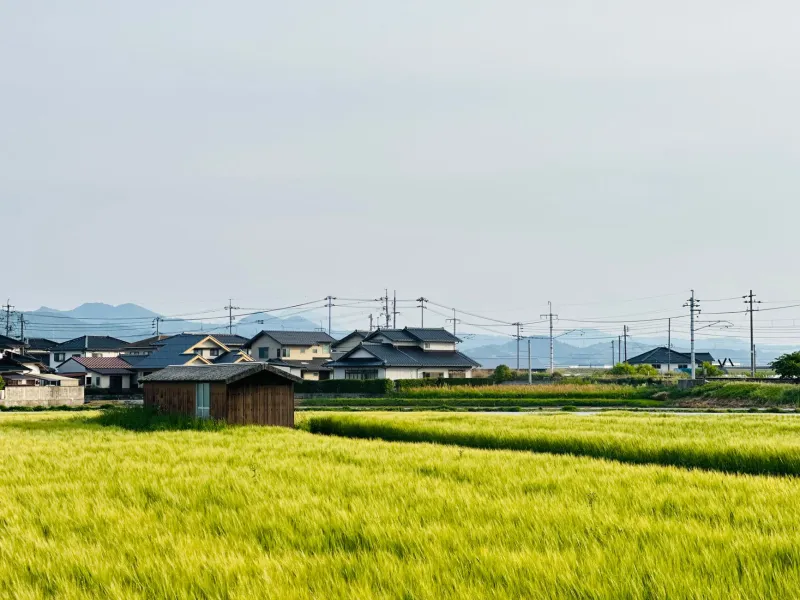
When most Americans picture moving to Japan, the mental image tends to involve a teaching contract in a mid-sized city, a corporate relocation package, or perhaps a student visa tied to a language school in Osaka. What rarely enters the conversation is the possibility of settling in a centuries-old farming village in Yamagata Prefecture, opening a small ceramics workshop in rural Tottori, or running a community-oriented guesthouse on the Noto Peninsula — all while holding a fully legal, long-term residency status that requires no Japanese employer and no corporate guarantor.
That possibility, however, is increasingly real. Japan's national government, alongside dozens of regional and prefectural administrations, has spent the better part of the last decade constructing a patchwork of visa categories and residency incentives specifically designed to attract skilled, entrepreneurially minded foreign nationals to areas experiencing population decline. For Americans with the patience to research these pathways, the rewards can be substantial.
The High-Skilled Professional Visa: More Flexible Than It Sounds
The High-Skilled Professional (HSP) visa — formally categorized under the Points-Based Preferential Immigration Treatment system — is frequently described in ways that make it sound like the exclusive domain of biotech researchers and multinational executives. In practice, its eligibility criteria are considerably broader.
The visa operates on a points-based scoring system that assigns numerical values to academic qualifications, annual income, professional experience, age, and Japanese language ability. An American with a graduate degree, a track record of freelance consulting income above a certain threshold, and even a modest proficiency in Japanese can accumulate enough points to qualify — particularly under Category ii, which covers specialized technical and humanities professions.
What makes this visa particularly attractive for rural-bound applicants is the set of privileges it confers. Holders can bring immediate family members without separate sponsorship requirements, may apply for permanent residency in as few as one to three years (compared to the standard ten-year pathway), and face fewer restrictions on the types of business activity they may conduct. For an American who intends to work remotely for a U.S.-based client while simultaneously developing a local enterprise — say, an agritourism venture in Akita — the HSP visa provides a legal framework that accommodates that kind of dual-track professional life.
Regional Revitalization Programs: The Prefecture-Level Factor
Beyond the national visa architecture, a growing number of prefectures have developed their own foreign resident attraction programs, often bundled with financial incentives, subsidized housing introductions, and dedicated administrative support. These programs do not issue visas independently — immigration status in Japan remains a national-level function — but they serve as critical support structures that make the visa application process far more navigable for foreign applicants.
Shimane Prefecture, for instance, has operated one of Japan's more internationally recognized rural migration support programs for several years, offering relocation subsidies and business startup grants to foreign nationals who commit to residing in designated depopulated areas. Tokushima Prefecture, home to the now-famous Kamiyama town revitalization initiative, has attracted a small but notable community of foreign creative professionals and remote workers through a combination of high-speed internet infrastructure investment and active outreach to international communities.
Nagano, Miyazaki, and Kochi prefectures have similarly developed English-language support desks within their regional revitalization offices — a practical acknowledgment that the administrative burden of relocation falls disproportionately on applicants who are not native Japanese speakers. For Americans navigating the process, identifying which prefectures have invested in this kind of infrastructure can be as important as selecting the right visa category.
The Business Manager Visa: An Entrepreneurial Entry Point
For Americans who arrive with a concrete business plan rather than a remote work arrangement, the Business Manager visa represents one of the most direct pathways to long-term rural residency. The requirements include establishing a physical business address in Japan, demonstrating a minimum capitalization level (generally two million yen or the equivalent in paid-in capital), and presenting a credible operational plan to the relevant immigration authority.
The rural dimension of this visa pathway is worth emphasizing. Urban prefectures — Tokyo, Kanagawa, Osaka — apply the standard national requirements with relatively little flexibility. Several rural prefectures, by contrast, have developed liaison programs with regional immigration offices that provide pre-application consultations, connect foreign applicants with local business registration advisors, and in some cases facilitate introductions to local government officials who can attest to the community value of a proposed enterprise. This informal support ecosystem does not change the legal requirements, but it can meaningfully reduce the error rate in applications and shorten processing timelines.
Americans who have pursued this route describe a wide range of business models: craft-focused retail operations, rural accommodation businesses, agricultural consulting services aimed at connecting Japanese producers with international buyers, and community education programs. The common thread is a genuine local presence — not a shell company registered in Japan to satisfy a visa requirement, but an operating business that employs local resources and contributes to the regional economy.
Practical Realities: What the Application Process Actually Involves
Candor is warranted here. None of these pathways are simple, and the gap between understanding a visa category conceptually and successfully completing an application can be substantial. Japanese immigration documentation requirements are exacting, and minor inconsistencies between submitted documents — a discrepancy in a translated address, a gap in employment history that isn't adequately explained — can result in requests for additional materials that extend processing times by weeks or months.
Most Americans who have successfully navigated these processes recommend engaging a registered immigration lawyer (gyoseishoshi) with demonstrated experience handling foreign national applications in rural prefectures. National-level immigration attorneys based in Tokyo are available and competent, but a practitioner with established relationships at the regional immigration bureau office covering your target prefecture will often be better positioned to anticipate local procedural nuances.
It is also worth noting that the translation requirements for U.S.-issued documents — birth certificates, educational transcripts, professional licenses, tax records — add both time and cost to the process. Building a realistic timeline of six to twelve months from initial research to approved residency status is prudent for most applicants.
Voices from the Field
Americans who have completed these transitions offer a consistent observation: the process is demanding, but the outcome is qualitatively different from what urban-based expat life typically provides. A graphic designer now based in rural Iwate, who obtained residency through the Business Manager pathway after establishing a small print and design studio, describes the local administrative office as having been "genuinely invested" in her application succeeding — a contrast, she notes, to the more transactional experience she had encountered during an earlier stint living in Fukuoka.
A former tech project manager who relocated to a mountain village in Nagano under the HSP visa framework describes the points calculation as "more forgiving than the official documentation suggests" for applicants with strong academic credentials and documented freelance income. He spent four months assembling his application package and an additional two months in processing — a timeline he considers reasonable given the permanence of the outcome.
A Resource Worth Consulting
For Americans at the early stages of exploring these pathways, the Japan Immigration Services Agency maintains an official English-language portal with current points calculators, document checklists, and processing time estimates. Regional prefectural governments with active foreign resident attraction programs typically maintain dedicated English-language pages within their official websites as well. Cross-referencing both sources — national requirements and local support infrastructure — provides the clearest picture of what a given route will actually involve.
Rural Japan is not waiting passively for foreign residents to arrive. In many prefectures, the invitation is explicit, the support is real, and the legal pathways are more accessible than most Americans realize. The first step is simply knowing where to look.