Shared Stakes, Shared Rewards: How Rural Japan's Cooperative Economy Offers Americans a New Way to Work and Invest
There is a particular kind of exhaustion that follows the startup lifecycle — the relentless fundraising rounds, the growth-at-all-costs mandates, the eventual pivot or collapse. For a growing number of Americans who have relocated to Japan's rural prefectures, the antidote has arrived in an unexpected form: the cooperative enterprise model that has quietly underpinned regional Japanese communities for well over a century.
This is not a fringe movement. Japan's cooperative sector represents one of the largest in the world by membership, and in rural areas especially, co-ops function as essential economic infrastructure — managing grocery distribution, agricultural inputs, healthcare services, and even insurance. What is changing now is the degree to which these organizations are beginning to welcome foreign residents as active participants, members, and in some cases, collaborative founders of new cooperative ventures.
Understanding the Cooperative Landscape in Regional Japan
Japan's cooperative economy operates through several distinct organizational types, each with its own governance structure and membership criteria. Agricultural cooperatives — known as nōkyō or, under their national federation umbrella, JA Group — have historically served farming households, providing access to equipment, seeds, financing, and collective bargaining power for crop sales. While these organizations have traditionally maintained strong ties to Japanese farming families, smaller regional affiliates have increasingly recognized the value of engaging newcomers who arrive with outside skills and fresh perspectives.
Separate from agricultural co-ops, consumer cooperatives (seikatsu kyōdō kumiai, often abbreviated as seikyō) operate retail and distribution networks across the country. Organizations such as Co-op Tohoku Sunchain and the broader Coop network serve millions of households, offering everything from weekly home delivery of groceries to shared childcare resources. Membership fees are modest — often between 1,000 and 10,000 yen — and the governance model ensures that every member holds an equal vote regardless of the size of their household or financial contribution.
For Americans accustomed to the transactional nature of retail consumption, joining a seikyō can feel genuinely disorienting in the best possible way. Surplus profits are distributed back to members in proportion to their purchasing activity, governance meetings are open to all, and the organizational mission is explicitly oriented toward community welfare rather than shareholder return.
The Contrast With Silicon Valley Thinking
It would be reductive to frame Japan's cooperative model as simply the opposite of venture-backed enterprise, yet the contrast is instructive. In the American startup ecosystem, value creation is typically concentrated among founders and early investors, with employees and customers occupying distinctly subordinate positions in the ownership structure. The exit — whether through acquisition or public offering — is the defining metric of success.
Cooperatives invert this logic almost entirely. There is no exit. There are no preferred shareholders waiting to liquidate. The organization exists to serve its members over the long term, and growth is measured not in valuation multiples but in the sustained wellbeing of the community it serves. For Americans who have grown weary of optimizing for metrics that feel disconnected from daily life, this reorientation can be genuinely liberating.
This is not to suggest that cooperatives are without their own challenges. Decision-making by consensus is slower. Capital formation is more constrained. Scaling rapidly is structurally difficult. But in rural Japan, where population decline and economic contraction have made aggressive growth targets largely irrelevant, these limitations often prove to be features rather than bugs.
Real Examples Worth Studying
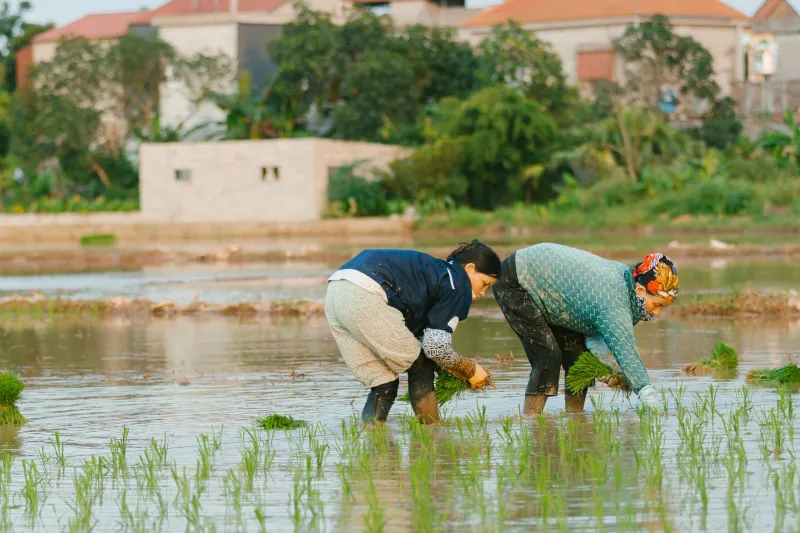
In Yamagata Prefecture, a worker-owned cooperative of small-scale vegetable farmers has developed a direct distribution network connecting rural producers with urban consumers in Sendai and beyond. Foreign residents with logistics or marketing backgrounds have found roles within this organization that leverage outside expertise while operating within a cooperative governance framework. The arrangement benefits both parties: the co-op gains skills it may lack internally, and the foreign participant gains access to a functioning rural enterprise without the burden of founding one from scratch.
In Shimane Prefecture — one of Japan's most sparsely populated regions — a community cooperative managing a combination of elder care services, shared transportation, and a small retail outlet has attracted international attention as a model for rural sustainability. Several foreign residents have joined as full members, and at least one American entrepreneur has worked with local government and cooperative leadership to explore an affiliated worker-owned enterprise focused on craft goods distribution.
The Kochi Prefecture cooperative network, meanwhile, has developed a notably progressive stance toward foreign membership, partly in response to regional labor shortages and partly due to the influence of local government initiatives designed to attract chihou sōsei (regional revitalization) participants from overseas.
How Americans Can Participate
For those currently residing in rural Japan, joining an existing consumer cooperative is typically the most accessible entry point. Membership applications are generally available at local co-op storefronts or through municipal community centers, and many organizations now provide basic documentation in English upon request. Your local chiiki okoshi kyōryokutai (regional revitalization cooperative) office can often facilitate introductions.
For Americans interested in founding a new cooperative enterprise, the pathway is more involved but entirely navigable. Japan's Chūshō Kigyō Kumiai (Small and Medium Enterprise Cooperative) framework provides a legal structure for worker-owned and producer cooperatives, and several regional support organizations offer guidance specifically for foreign entrepreneurs. Engaging a bilingual gyōsei shoshi (administrative scrivener) early in the process is strongly advisable, as cooperative registration requirements vary by prefecture and organizational type.
Networking through organizations such as the Japan Cooperative Alliance and attending regional business forums — many of which now feature English-language programming — can provide invaluable connections to established cooperative leadership who may be open to collaboration.
The Deeper Appeal
Beyond the structural and financial considerations, many Americans who engage with Japan's cooperative sector describe something less tangible but equally significant: a sense of genuine belonging within the economic life of their community. When you are a member-owner of the organization that delivers your groceries, manages the community hall, or sells the produce you helped grow, the relationship between commerce and community collapses in a way that feels rare and valuable.
Japan's rural cooperatives were not designed with American expats in mind. They emerged from centuries of collective agricultural practice, postwar necessity, and a cultural disposition toward mutual obligation that differs meaningfully from the individualism that shapes much of American economic life. That difference is precisely what makes them worth understanding — and, for those with the patience and commitment to engage seriously, worth joining.
The quiet economy has been here all along. It simply did not need a press release.