Station Towns and Slow Mornings: How Japan's Local Rail Networks Are Redefining the Good Life for Foreign Residents
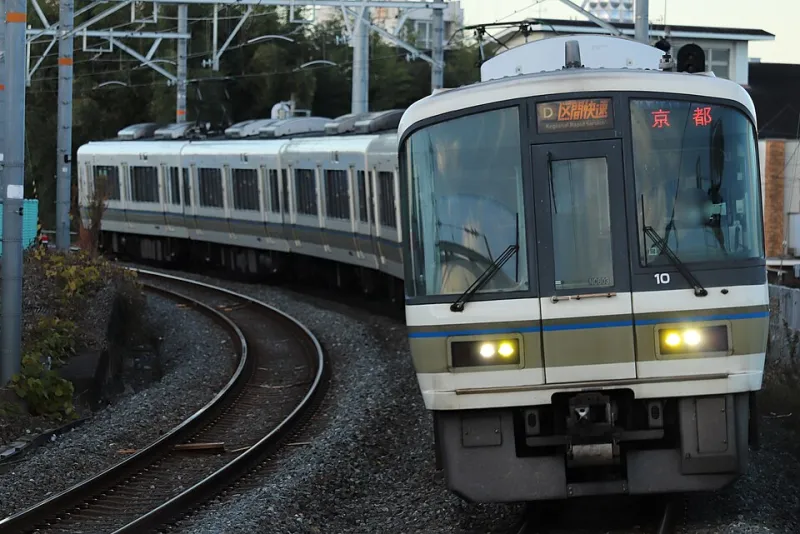
Photo: おしりぺんぺん草, CC BY 4.0, via Wikimedia Commons
There is a particular kind of morning that becomes available to you when you choose to live along one of Japan's regional train lines. The alarm sounds at seven. By seven-twenty, you have walked five minutes through a quiet residential street, passed a tofu shop already open for the day, and stepped onto a platform where the train — on time to the minute — is waiting. By eight, you are at your desk in a co-working space one town over, or simply back at your kitchen table, laptop open, with a view of rice paddies rather than a parking garage.
This is not a fantasy. For a growing number of American expats and remote workers, it is Tuesday.
Japan's regional rail networks, long overlooked in favor of the Shinkansen bullet train corridors and Tokyo's labyrinthine subway, are quietly emerging as one of the most underappreciated assets for foreign residents who have chosen to build their lives outside the major metropolitan areas. Understanding how these lines work — and, more importantly, how communities have organized themselves around them — can fundamentally change how you approach the question of where to live in rural and semi-rural Japan.
What Is a "Station Town" and Why Does It Matter?
In Japanese planning and cultural vocabulary, communities that have historically developed around a train station carry a distinctive character. The station is not merely a transit node; it is the social and commercial nucleus of daily life. The covered shopping arcade, the post office, the izakaya where the local sake is poured — these institutions cluster within walking distance of the platform, forming what urban planners sometimes call a "compact community."
For Americans accustomed to car-dependent suburbs where the nearest grocery store requires a fifteen-minute drive, the logic of a station town can feel almost radical in its practicality. Nearly everything you need for daily life is accessible on foot, and what lies beyond that radius is accessible by train. Car ownership becomes optional rather than obligatory — a significant financial consideration when you factor in the costs of insurance, fuel, and Japan's mandatory vehicle inspection system.
The financial arithmetic is worth pausing on. A two-bedroom apartment within walking distance of a regional station in Nagano Prefecture can rent for a fraction of the cost of a comparable unit in Tokyo or Osaka. In some cases, municipal governments actively subsidize relocation to these communities, offering housing allowances and childcare support to attract working-age residents. When you add the elimination of a car payment and the savings on commuting costs, the economic case for station-town living becomes compelling.
Three Regional Lines Worth Knowing
The Chuo Line in Nagano and Yamanashi
Running inland from the Tokyo metropolitan area through the Japanese Alps, the Chuo Line and its various branch connections serve a string of towns that have become increasingly popular with remote workers seeking mountain scenery without mountain isolation. Communities like Kofu in Yamanashi Prefecture and Matsumoto in Nagano sit on or near this corridor, offering direct rail access to Tokyo in roughly ninety minutes to two hours while maintaining their distinctly provincial character.
For Americans who want the option of an occasional day trip to the capital for meetings or cultural events without permanently relocating there, this line represents a practical sweet spot. Housing costs in these areas remain substantially lower than in Tokyo's western suburbs, and the local food culture — built around freshwater fish, mountain vegetables, and some of Japan's finest sake — is a draw in its own right.
The Iyo Railway and JR Shikoku Networks
Shikoku, Japan's fourth-largest island, is often described as the country's most overlooked region, a characterization that its growing community of foreign residents would argue is both accurate and deeply fortunate. The island's rail networks, including the Iyo Railway in Ehime Prefecture and JR Shikoku's main lines, connect a series of coastal and inland communities where the pace of life slows considerably and the cost of living drops further still.
Ehime's prefectural capital, Matsuyama, is served by the Iyo Railway's extensive tram and rail network — one of the few remaining urban tram systems still operating in Japan — and functions as a regional hub from which smaller station communities extend in multiple directions. Several Americans interviewed for this article described choosing their specific neighborhood in Ehime based almost entirely on which tram stop was closest.
The Shinano Railway in Northern Nagano
Operating independently of the JR network, the Shinano Railway runs through the Nagano basin and connects communities that saw significant investment following the 1998 Winter Olympics. Towns along this line have retained their post-Olympic infrastructure — including sports facilities, international-standard accommodations, and English-language services — while reverting to the quieter rhythms of provincial life. For remote workers who want reliable broadband, walkable streets, and occasional access to world-class ski slopes, the Shinano corridor is worth serious consideration.
The Commute That Isn't Really a Commute
One of the conceptual shifts that many American expats describe after settling into station-town life is a fundamental rethinking of what a commute means. In the United States, the commute is almost universally experienced as dead time — minutes or hours extracted from your day by the mechanical necessity of getting from one place to another. On Japan's regional lines, the experience can be quite different.
Trains are quiet. Passengers do not talk on their phones. The seats are clean. The windows frame countryside that changes with the seasons — cherry blossoms in April, deep summer green in July, the amber and rust of November. Many remote workers describe using their fifteen- or twenty-minute rail segments for reading, reviewing documents, or simply sitting with their thoughts in a way that the American driving commute makes structurally impossible.
This is not a minor quality-of-life detail. It is, for many people, the difference between arriving at work depleted and arriving ready to think.
Practical Considerations for Choosing Your Station
For Americans actively considering a move to a station-town community, several practical factors deserve attention before signing a lease.
First, assess the frequency of service. Some regional lines run trains every ten to fifteen minutes during peak hours; others operate on hourly or even less frequent schedules. Your tolerance for schedule-dependent living will determine which lines are genuinely suitable for your work rhythm.
Second, investigate the amenities within walking distance of the station you are considering. A useful exercise is to spend a full day in the town — arrive by train, walk the streets, identify the supermarket, the post office, the nearest clinic, and the presence or absence of an English-speaking community. Many regional municipalities now publish relocation support materials in English, and some maintain dedicated staff to assist prospective foreign residents.
Third, consider the station's connection to larger hubs. Even if you work entirely remotely, the occasional need for a visa appointment, a specialized medical consultation, or an international flight will require access to a major city. Understanding how your chosen station connects — and how long those connections take — will prevent frustration down the road.
A Different Kind of Address
The Americans who have built their lives along Japan's regional rail corridors tend to describe the experience in similar terms: a sense of being genuinely embedded in a place, rather than merely passing through it. The station becomes a landmark, a meeting point, a source of mild local pride. The train schedule becomes a rhythm that organizes the day without dominating it.
For those accustomed to the formlessness of American suburban life, where the car is the only connective tissue between otherwise disconnected destinations, the station town offers something that is difficult to quantify but immediately felt: the sensation of living in a place that was designed, at some level, for the people who live there.
That, perhaps more than the affordable rent or the mountain views, is what keeps people from leaving.