Acres, Equity, and Legacy: Why Rural Japan Is Becoming America's Favorite Overseas Property Market
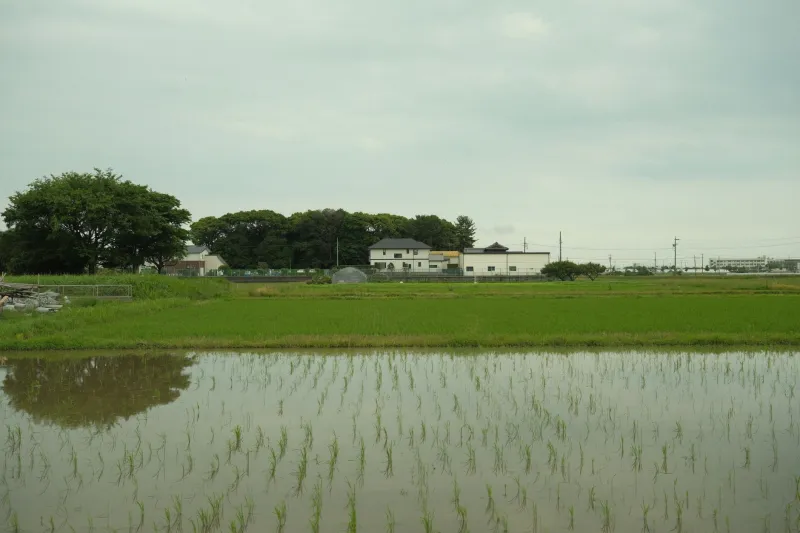
In an era when a modest home in a mid-tier American city can carry a price tag north of half a million dollars, a growing number of US citizens are directing their attention — and their capital — toward a rather different market. Rural Japan, long overlooked by international investors, is quietly emerging as one of the most financially accessible and culturally rewarding places for Americans to build real, tangible wealth over the long term.
The numbers alone are striking. Detached homes in depopulating Japanese prefectures regularly list for the equivalent of $30,000 to $80,000. Some properties, classified as akiya (vacant or abandoned homes), are available for nominal fees or even at no cost through municipal transfer programs designed to attract new residents. Yet the story of building generational assets in rural Japan is far more nuanced than a simple bargain hunt. It encompasses legal frameworks, cultural obligations, tax structures, and a philosophy of community investment that distinguishes this market from anything most Americans have previously encountered.
What "Affordable" Actually Means in the Japanese Countryside
The word "affordable" carries different weight depending on the region. In Shimane, Kochi, or parts of Akita, properties that would cost millions in equivalent square footage in Los Angeles or New York are available for a fraction of that price. But affordability in rural Japan extends well beyond the purchase price.
Annual property taxes in many rural municipalities are strikingly low — sometimes under $500 per year for a mid-sized traditional farmhouse with land. Renovation subsidies offered by prefectural and municipal governments can offset a significant portion of restoration costs, particularly when buyers commit to establishing primary residence. Several towns in regions such as Tokushima and Nagano have introduced programs that provide direct cash incentives — sometimes reaching the equivalent of $10,000 or more — to families who relocate and invest in local properties.
For Americans accustomed to property tax bills that rival car payments, and homeowner association fees that add thousands annually, the cost structure of rural Japanese ownership can feel almost disorienting in its modesty.
The Legal Landscape: What Americans Can and Cannot Own
Japan does not restrict foreign nationals from purchasing real estate. Unlike some countries that impose barriers on non-citizen ownership, Japan permits Americans — whether resident or non-resident — to buy land and buildings outright. There is no requirement to hold a visa, establish a local company, or navigate a complex ownership trust structure simply to purchase property.
That said, practical and procedural complexities do exist. All real estate transactions must be conducted through a licensed fudōsan (real estate agent), and documentation requirements can be extensive for foreign buyers who lack a Japanese address or bank account. Engaging a bilingual judicial scrivener (shiho shoshi) is strongly advisable, as property registration and title transfer require precise legal filings with the local Legal Affairs Bureau.
For Americans considering agricultural land specifically, additional regulations apply. Under Japan's Agricultural Land Act, farmland purchases require approval from the local Agricultural Committee (nochi iinkai), which typically mandates that buyers demonstrate a genuine intent to cultivate the land. Some municipalities have established pathways for foreign nationals to satisfy this requirement through cooperative farming arrangements or by partnering with established local agricultural entities.
Inherited Properties and the Akiya Opportunity
Perhaps the most distinctive feature of the rural Japanese property market is the akiya phenomenon. Japan currently holds an estimated nine million vacant properties, a figure projected to rise as rural depopulation continues. Many of these homes have been abandoned by heirs who relocated to urban centers and lack both the financial means and the inclination to maintain them.
Several Americans have successfully acquired akiya properties through prefectural vacancy registries — publicly accessible databases that list available homes, often with photographs, condition reports, and contact information for local intermediaries. The process is not instantaneous; negotiations can take months, and properties with unclear inheritance chains require careful legal due diligence. However, for buyers willing to invest the time, the rewards can be substantial.
Americans who have completed akiya acquisitions frequently describe a process that, while bureaucratically demanding, ultimately delivers a sense of ownership depth that domestic real estate rarely provides. Owning a century-old minka farmhouse on half an acre of land, with a clear title and a supportive municipal government, represents a form of asset security that resonates differently than holding a condominium unit in a high-rise development.
Building Generational Wealth Through Community Embeddedness
Property in rural Japan does not exist in isolation from community. The concept of satoyama — the traditional landscape of villages, forests, and cultivated fields managed collectively — reflects a broader cultural understanding that land carries social as well as financial value. Americans who purchase property in these communities are, in effect, entering into a long-term relationship with their neighbors and local institutions.
This embeddedness, while demanding in its own right, creates conditions that are unusually favorable for long-term asset preservation. Properties that are actively maintained, inhabited, and integrated into local life tend to hold their value far more reliably than vacant structures. Municipal governments frequently provide preferential treatment — in the form of renovation grants, utility subsidies, and community support — to residents who demonstrate genuine commitment to the area.
For Americans thinking in terms of multi-generational planning, this dynamic matters considerably. A property that serves as a family base, generates modest agricultural or rental income, and appreciates in cultural significance over decades represents a fundamentally different kind of wealth than a purely speculative real estate holding.
Tax Considerations for US Citizens Holding Japanese Property
Americans investing in Japanese real estate must navigate the requirements of both countries' tax systems. Japan imposes acquisition tax at the time of purchase, fixed asset tax annually, and capital gains tax upon sale. The rates are generally moderate by international standards, and various exemptions apply depending on how the property is used.
On the US side, the Foreign Account Tax Compliance Act (FATCA) and standard IRS reporting obligations apply to Americans holding assets abroad. Rental income generated from Japanese property must be reported on US federal returns, and any capital gains realized upon sale are subject to US taxation, with credits available for taxes already paid in Japan under the US-Japan tax treaty.
Engaging a tax professional with experience in both jurisdictions is not optional — it is essential. The intersection of two tax systems introduces complexity that, if mismanaged, can erode the financial advantages that made the investment attractive in the first place.
A Long View Worth Taking
The appeal of rural Japanese property for American investors is not reducible to low prices alone. It reflects a broader shift in how a segment of the US population thinks about wealth — not merely as a figure on a balance sheet, but as something rooted in place, community, and time. The countryside of Japan, with its ancient farmhouses, working landscapes, and deeply embedded local economies, offers a context in which that kind of wealth can genuinely take root.
For those willing to engage seriously with the legal, cultural, and logistical requirements, the Japanese countryside represents one of the more compelling long-term investment environments available to American buyers today. The barriers are real, but so are the rewards — measured not only in yen, but in the quieter currency of a life built with intention.