The Unwritten Rules: A Practical Guide to Business Etiquette and Trust-Building with Local Japanese Shop Owners
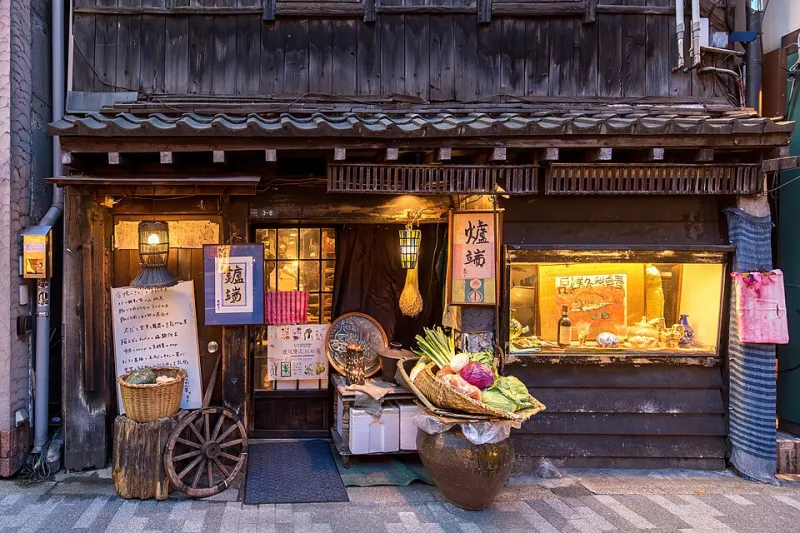
Photo: Basile Morin, CC BY-SA 4.0, via Wikimedia Commons
There is a particular kind of frustration that Americans sometimes experience when shopping or doing business in rural Japan. You walk into a ceramics workshop, a family-run sake brewery, or a generations-old textile shop. The products are extraordinary. The owner is courteous. And yet something remains just slightly out of reach — a warmth that hasn't fully extended, a transaction that feels complete on paper but somehow unfinished in spirit.
This is not unfriendliness. It is the natural result of two very different cultural frameworks for commerce meeting without a proper introduction. Japanese regional business culture operates on a set of principles — some explicit, many entirely unspoken — that prioritize relationship over transaction, long-term trust over short-term efficiency, and contextual communication over blunt directness. For Americans accustomed to the frank, get-to-the-point style of Western commerce, these principles require genuine adjustment.
The good news is that they are learnable. And once internalized, they open doors that no amount of money or enthusiasm can force open alone.
First Impressions: The Weight of the Initial Greeting
In American business culture, a firm handshake and direct eye contact signal confidence and good faith. In Japanese regional commerce, that same directness can inadvertently read as aggressive or presumptuous, particularly with older business owners or those with limited international experience.
The bow remains the foundational greeting in Japan, and while foreign visitors are not expected to perform it with the precision of a native, making a sincere attempt signals respect immediately. A modest forward inclination of the head and upper body — roughly fifteen degrees — is entirely appropriate for an initial meeting. Deeper bows are reserved for more formal contexts or expressions of significant gratitude.
When entering a small shop or workshop, wait to be acknowledged before moving deeper into the space. Many regional business owners, particularly artisans working in attached studios, are in the middle of processes that require concentration. Announcing your presence with a polite "Sumimasen" (excuse me) and allowing the owner to set the pace of the interaction demonstrates the kind of situational awareness that Japanese business culture values highly.
Business cards — meishi — carry considerable symbolic weight in Japan. If you are conducting any form of professional engagement, presenting a card with both hands, Japanese text facing the recipient if possible, and receiving their card with equal care (studying it briefly before setting it respectfully on the table rather than pocketing it immediately) is a gesture that will be noticed and appreciated.
Communication Style: Reading Between the Lines
Perhaps the single most important adjustment American visitors and residents must make involves communication style. Japanese business communication, particularly in regional contexts, tends toward indirectness. A "that might be difficult" is frequently a polite refusal. Silence following a proposal is rarely neutral — it often signals discomfort or disagreement that the speaker is too courteous to state outright.
This is not evasiveness. It reflects a cultural priority placed on preserving harmony and avoiding the discomfort that direct confrontation creates for all parties. Once you recognize the pattern, navigating it becomes considerably easier.
In practical terms, this means listening as carefully to what is not said as to what is. It means framing requests as questions rather than demands, and expressing flexibility even when your actual flexibility is limited. It means accepting that a relationship that will eventually allow for frank negotiation must first be built through a series of lower-stakes, trust-accumulating interactions.
For Americans who find this pace frustrating, it helps to reframe the investment. A regional shop owner who trusts you may offer access to products not displayed publicly, introduce you to other local makers, or accommodate requests that would be impossible for a stranger. The patience required to reach that point is, in effect, the price of admission to a much richer experience.
Seasonal Gift-Giving: Ochugen and Oseibo
Japan maintains two major gift-giving seasons that carry significant weight in business relationships: ochugen, observed in mid-summer (roughly July), and oseibo, which falls in December. These are not optional social niceties — for many Japanese business owners, they are a primary mechanism through which professional relationships are maintained and expressed.
For Americans who have developed ongoing relationships with regional vendors, artisans, or service providers, participating in these traditions is a meaningful investment. Appropriate gifts tend toward the consumable and the regional: locally produced sweets, premium packaged teas, seasonal fruits, or specialty food items from your home region of the United States. The presentation of the gift matters as much as its contents — wrapping should be neat and, when possible, handled by a reputable department store or specialty shop.
Presenting a gift with both hands and a brief verbal acknowledgment of the relationship — something along the lines of expressing gratitude for their continued support — follows the expected form. Do not be surprised if the recipient sets the gift aside without opening it immediately; this is customary and is not a sign of disinterest.
Payment, Pricing, and the Art of Not Haggling
One adjustment that surprises many Americans is the near-universal Japanese expectation that stated prices are final. Haggling, common in many parts of the world and not entirely unusual in American flea markets or private sales, is considered deeply inappropriate in most Japanese retail and small-business contexts. Attempting to negotiate a lower price from a regional artisan or shop owner can cause genuine embarrassment and may permanently damage the relationship.
Cash remains king in regional Japan, particularly among older business owners and smaller establishments. While major cities have adopted electronic payment broadly, many rural and semi-rural shops still operate primarily in cash. Carrying sufficient yen and presenting payment without fumbling or requiring change for large bills reflects the kind of practical preparedness that Japanese business owners quietly appreciate.
When purchasing from artisans or craftspeople, asking thoughtful questions about the work — its origins, the materials used, the time invested — is a form of respect that often means more to the maker than the transaction itself. These conversations, conducted with genuine curiosity rather than as a negotiating tactic, are frequently the foundation of the longer relationships described earlier.
Building the Long Game: Repeat Visits and Remembered Names
In regional Japanese commerce, consistency is a form of loyalty, and loyalty is genuinely valued. Returning to the same shops, using the same service providers, and introducing trusted friends to businesses you patronize are all actions that accumulate goodwill over time.
Learning and using the owner's name — and allowing them to learn yours — transforms a transactional relationship into something closer to what Japanese culture calls a naka (a close connection built through shared experience). This does not require fluency in Japanese, though even basic conversational ability accelerates the process considerably.
Regional Japan rewards those who approach it not as a series of experiences to be consumed, but as a community to be joined. The business owners, craftspeople, and entrepreneurs who make up that community have much to offer — and they are, in the truest sense, waiting to be properly introduced.