Straight from the Source: A Regional Guide to Buying Authentic Japanese Craft Directly from the Makers
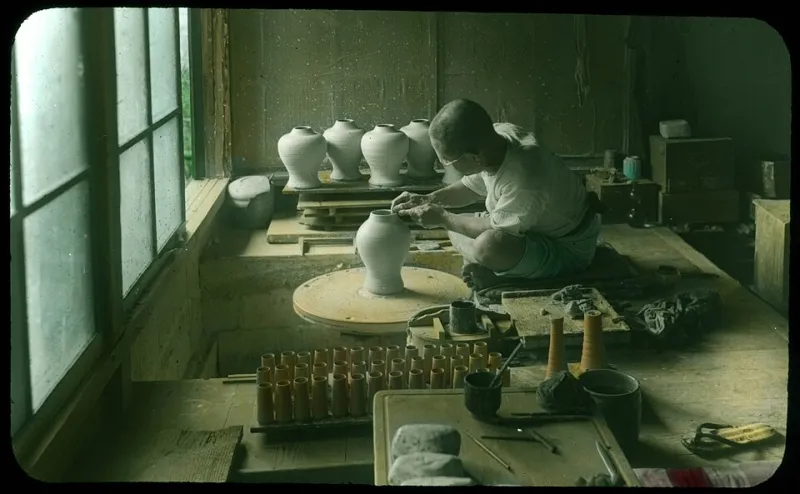
Photo: University of Victoria Libraries from Victoria, Canada, No restrictions, via Wikimedia Commons
When you purchase a mass-produced souvenir from a Tokyo airport gift shop, you are buying an approximation of Japanese culture. When you buy a hand-thrown bowl directly from a potter in Arita, or a length of hand-woven indigo cloth from a weaver in Tokushima, you are participating in something far more meaningful — a direct exchange between maker and owner that has sustained Japanese communities for generations.
Japan's regional craft traditions are among the most sophisticated in the world, and many of them are concentrated in towns and villages that most international visitors never reach. For American buyers with a genuine interest in quality, provenance, and cultural authenticity, these communities represent an extraordinary opportunity. Kaigot Japan Local has compiled this regional guide to help you navigate the landscape.
Why Buying Direct Matters
Before diving into specific regions, it is worth understanding what is at stake. Japan designates hundreds of products as dento kogei — traditional crafts — under the Act for the Promotion of Traditional Craft Industries. These designations protect production methods, materials, and regional origins. However, designation alone does not guarantee that a product sold through a third-party retailer was made by skilled hands in the region it claims to represent.
Purchasing directly from artisan studios eliminates that ambiguity. You know exactly who made your piece, where the materials came from, and what techniques were employed. You also ensure that the economic benefit flows directly to the maker and, by extension, to the regional community that sustains the craft. Middlemen, export brokers, and large retail platforms all take a share that never reaches the workshop floor.
For the American buyer, direct purchasing also tends to yield better value. Studio prices, while not always cheap — great craft rarely is — reflect fair compensation for skilled labor rather than retail markups layered upon wholesale markups.
Region by Region: Japan's Craft Heartlands
Arita and Imari, Saga Prefecture — Porcelain and Ceramics
Arita has been producing porcelain for over four hundred years, and its distinctive blue-and-white and polychrome Imari ware became Japan's first major export product during the Edo period. European royalty collected it. American museums display it. And today, visitors can walk directly into working kilns and purchase pieces from the potters themselves.
The town of Arita hosts the annual Arita Ceramic Fair, which draws hundreds of thousands of visitors each spring, but studio visits are available year-round. Several kilns, including historic names such as Fukagawa Seiji and Gen'emon Kiln, maintain English-language pages and accept international orders directly through their websites. For those who cannot travel, platforms such as Savoir Faire and Japan Objects Store carry verified Arita pieces with clear maker attribution.
Kyoto and Nishijin — Textiles and Weaving
While Kyoto is not a small town, its textile quarter of Nishijin operates as a distinct artisan village within the city. The Nishijin-ori weaving tradition produces some of the most technically complex silk fabrics in the world, used historically for imperial court garments and obi sashes for formal kimono.
Several Nishijin weaving houses — called nishijin-ori meika — have opened their looms to visitors and established direct international sales channels. The Nishijin Textile Center offers demonstrations, while smaller studios welcome appointments for serious buyers. Prices reflect the extraordinary labor involved: a single obi can require weeks of work on a Jacquard loom. That context makes the price tag comprehensible and, for many buyers, entirely justified.
Tsubame-Sanjo, Niigata Prefecture — Metalwork and Cutlery
If you have ever used a high-quality Japanese kitchen knife, there is a reasonable chance it originated in the Tsubame-Sanjo region of Niigata. This industrial corridor has produced metalwork for centuries, evolving from nail production during the Edo period to world-renowned cutlery, cookware, and precision tools.
The area is home to dozens of workshops that sell directly to consumers, and the Tsubame-Sanjo Factory Festival (kouba matsuri), held each autumn, opens manufacturing facilities to the public in a way that is genuinely rare anywhere in the world. Brands such as Nagao and Yoshida Metal Industry maintain international e-commerce operations, and several offer custom engraving services for overseas buyers.
Okinawa — Ryukyu Textiles and Lacquerware
Okinawa's craft traditions are distinct from those of mainland Japan, reflecting the islands' history as the independent Ryukyu Kingdom. Bingata, a stencil-dyed textile featuring vivid tropical motifs, and Ryukyu lacquerware, characterized by deep reds and intricate gold inlay, are among the most visually striking crafts in the Japanese archipelago.
Naha's Tsuboya pottery district and the Naha Traditional Craft Center provide accessible entry points for visitors, while organizations such as the Okinawa Prefectural Museum help connect buyers with certified artisans. Because Okinawan crafts remain less globally prominent than those of Kyoto or Arita, prices tend to be more accessible — making this an excellent region for first-time buyers of Japanese craft.
Nada, Hyogo Prefecture — Artisan Sake Brewing
Craft is not limited to objects you can hang on a wall or place on a shelf. The Nada district of Kobe, along with the neighboring region of Fushimi in Kyoto, produces some of Japan's most celebrated sake. Small family breweries (jizake kura) have increasingly opened their doors to international visitors and established direct export relationships with American importers.
While federal regulations complicate direct alcohol shipping to US consumers, several platforms including Tippsy Sake and Umami Insider work directly with regional breweries to bring authentic jizake to American tables. Visiting a working kura during the winter brewing season (shikomi) is one of the more immersive craft experiences Japan offers.
How to Visit Maker Studios
Most artisan studios in Japan do not operate like retail stores. Visits are often by appointment, and communication may require some advance planning. The following steps will improve your experience considerably.
- Research prefectural craft associations. Most Japanese prefectures maintain official craft promotion organizations that can facilitate introductions and provide English-language resources.
- Use regional tourism boards. Bodies such as the Saga Prefecture Tourism Federation or the Niigata Tourism and Convention Association actively support craft tourism and can help arrange studio visits.
- Contact studios directly, with patience. Email inquiries in simple, clear English are generally welcomed. Allow extra time for responses, and be specific about your interest and travel dates.
- Consider a craft-focused tour operator. Companies such as Wabi-Sabi Japan and Artisans Japan specialize in connecting international visitors with working studios and can handle logistics that might otherwise prove challenging.
Trusted Platforms for US Buyers
For those who cannot travel to Japan, the following e-commerce platforms have established reputations for working directly with regional artisans and providing transparent maker information.
- Kogei Japan — An official platform supported by the Japan Craft and Design Association, featuring verified traditional craft products with full maker attribution.
- Etsy Japan — While variable in quality, careful filtering by seller location and craft category can surface genuine regional artisans.
- Japan Objects Store — Curated selection with a strong editorial focus on provenance and maker stories.
- Savoir Faire — Specializes in premium Japanese craft with English-language maker profiles and direct artisan relationships.
The Deeper Value of Craft
Japan's regional craft traditions are not museum pieces. They are living practices, sustained by real people in real communities who have chosen to dedicate their professional lives to skills that take decades to master. When Americans engage with these crafts — whether by visiting a studio in Arita, ordering a knife from Tsubame-Sanjo, or attending a textile demonstration in Nishijin — they become part of a chain of appreciation and support that helps keep these traditions alive.
Kaigot Japan Local believes that authentic regional culture is best experienced and supported at the source. Our regional directories and community guides are designed to help you find the makers, the workshops, and the communities that make Japan's craft heritage one of the most remarkable in the world.