Beyond the Neon Lights: American Expats Discovering Community and Career in Japan's Overlooked Prefectures
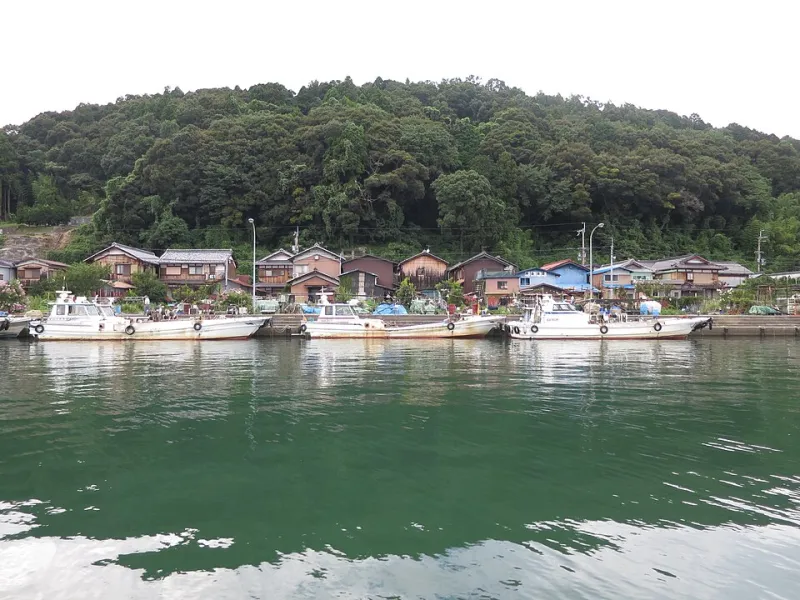
Photo: Tamaki Sono, CC BY 2.0, via Wikimedia Commons
For decades, the standard script for Americans moving to Japan read something like this: land at Narita, navigate to a Shinjuku apartment, and begin the slow, expensive process of carving out a life in one of the world's most densely populated cities. That script is being rewritten. Across Japan's forty-seven prefectures, a quieter migration is underway — one driven not by corporate transfers or English-teaching contracts, but by deliberate choices about quality of life, affordability, and community.
Kaigot Japan Local spoke with expat residents, regional relocation coordinators, and local business owners across four prefectures that are actively courting English-speaking newcomers. What emerged was a picture of Japan that most guidebooks simply do not show.
Tokushima: The Prefecture That Built a Welcome Mat for Remote Workers
Nestled on the eastern coast of Shikoku island, Tokushima Prefecture might not appear on the average American's Japan itinerary. Yet its Kamiyama and Nishiawa regions have quietly become among the most talked-about relocation destinations in the entire country for location-independent professionals.
The prefecture's "Tokushima Model" — a high-speed fiber-optic network rolled out to even its most rural villages — was an early signal that local government was serious about reversing depopulation trends. Today, that infrastructure supports a small but vocal community of American remote workers, many of whom arrived through Japan's Digital Nomad Visa, introduced in 2024, which permits stays of up to six months for qualifying applicants earning above a stated income threshold.
Mark, a software engineer from Portland who relocated to Kamiyama in 2023, describes his monthly expenses as roughly forty percent lower than what he paid in Oregon. "Rent for a renovated traditional farmhouse — an akiya, they call them — runs me about $400 a month," he says. "Groceries are cheap if you shop at the local JA cooperative markets. The tradeoff is that you need some Japanese, or at least a willingness to learn."
For networking, Tokushima expats point to the Kamiyama Workation Project, a government-supported initiative that regularly hosts mixers connecting international residents with local entrepreneurs. English-language support is limited but growing, and several regional NPOs now offer translation assistance for visa paperwork and municipal registration.
Yamagata: Four Seasons, Low Costs, and a Surprisingly Connected International Scene
In Japan's Tohoku region, Yamagata Prefecture offers a strikingly different proposition. Known domestically for its cherries, hot springs, and heavy winter snowfall, it has developed a modest but organized expat infrastructure that many larger prefectures lack.
The Yamagata International Association (YIA) maintains an English-language helpline and publishes a practical relocation guide updated annually. Several municipalities within the prefecture — including Yamagata City and Tsuruoka — offer subsidized Japanese language courses specifically designed for adult foreign residents. Cost of living here is among the lowest in the country; a two-bedroom apartment in Yamagata City averages between $350 and $550 per month, and public transportation, while less frequent than in urban centers, covers most daily needs.
Career opportunities in Yamagata tend to cluster around agriculture-adjacent industries, food manufacturing, and educational services. There is consistent demand for English instructors through the JET Programme and through private eikaiwas, though remote-work arrangements are increasingly common among newer arrivals. The prefecture's proximity to Sendai — a major regional hub accessible by Shinkansen in roughly 50 minutes — means that urban amenities are never entirely out of reach.
Oita: Hot Springs, International University Culture, and a Coastal Lifestyle
Oita Prefecture, on the northeastern coast of Kyushu, carries a reputation built almost entirely on its onsen. Beppu and Yufuin are internationally recognized spa destinations, but the prefecture's appeal for long-term residents extends well beyond its geothermal attractions.
Ritsumeikan Asia Pacific University (APU) in Beppu draws students and faculty from across the globe, generating an unusually cosmopolitan atmosphere for a city of its size. The university's presence has cultivated a network of international-friendly businesses, multilingual medical services, and English-speaking community groups that benefit the broader expat population.
Oita's coastline and relatively mild climate attract Americans seeking an outdoor-oriented lifestyle at a fraction of what comparable coastal living costs in the United States. Several municipalities within the prefecture offer akiya bank programs — essentially registries of vacant, often low-cost properties available for purchase or rent — with some offering renovation subsidies to foreign buyers willing to commit to long-term residency.
Visa pathways most relevant to Oita-bound Americans include the standard Specified Skilled Worker visa for those in qualifying industries, the Business Manager visa for entrepreneurs establishing local enterprises, and the aforementioned Digital Nomad Visa for shorter-term residents. Oita's prefectural government has an international affairs division that responds to English-language inquiries, making initial bureaucratic navigation somewhat more accessible than in less internationally oriented regions.
Nagano: Mountain Living with Surprisingly Strong International Roots
Landlocked and mountainous, Nagano Prefecture carries a legacy of international engagement that dates to its 1998 Winter Olympics. That history left behind infrastructure, international goodwill, and a local population with a higher-than-average comfort level around foreign residents.
Today, Nagano attracts Americans drawn to outdoor recreation — skiing, hiking, and cycling are central to daily life here — as well as those seeking the aesthetic and spiritual appeal of traditional Japanese mountain culture. The prefecture is home to Zenko-ji, one of Japan's most visited Buddhist temples, and to several well-preserved post towns along historic highway routes.
The Nagano International Relations Association (NAIRA) provides settlement support services in English and coordinates regular community events. Housing costs vary significantly by location; rural villages in the Ina Valley or Kiso region offer dramatically lower rents than the more tourism-influenced Hakuba or Karuizawa areas. Americans with skills in hospitality, outdoor guiding, or agricultural work will find the most immediate employment pathways, though the prefecture's growing remote-work community suggests that location-independent careers are becoming the dominant entry point.
Practical Considerations Before You Commit
Relocating to any Japanese prefecture — whether well-known or obscure — requires careful preparation. A few practical notes for American readers:
Visa planning is non-negotiable. Japan's immigration system does not offer a straightforward long-stay visa for retirees or passive income earners, though the Digital Nomad Visa and various work-category visas cover many situations. Consulting an immigration specialist before committing to a specific prefecture is strongly advised.
Language matters more outside major cities. English signage and English-speaking service providers are significantly less common in rural and semi-rural prefectures. Even a foundational level of Japanese — perhaps JLPT N5 or N4 — will meaningfully improve daily life and community integration.
Local government offices are your first resource. Most prefectures maintain international affairs divisions with some English-language capacity. Contacting these offices before arrival can clarify everything from health insurance enrollment to school registration for families with children.
Community finding takes intention. Unlike Tokyo, where expat meetups are abundant and easy to discover, smaller prefectures require proactive outreach. Online communities such as prefecture-specific Facebook groups and the r/japanlife subreddit can connect you with existing residents before you arrive.
Japan's regional prefectures are not a compromise for those who cannot afford Tokyo. For a growing number of American residents, they are the destination itself — places where a slower pace, lower costs, and genuine community connection offer something the capital simply cannot replicate.