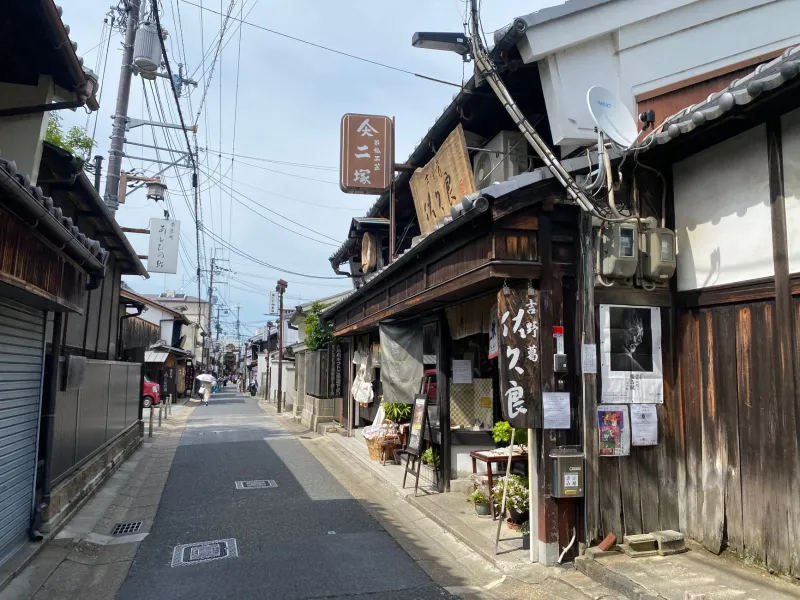
Fiber in the Fields: Why Japan's Rural Internet Puts American Countryside Connectivity to Shame
When a software engineer from Asheville, North Carolina, moved to a small town in Nagano Prefecture, she expected to make trade-offs. She anticipated narrower grocery aisles, fewer English-language services, and perhaps — above all else — slower internet. What she found instead was a symmetrical gigabit fiber connection installed within a week of signing her lease, at a monthly cost that would not cover a single streaming subscription back home. "I was uploading project files faster than I ever did in my apartment in Charlotte," she recalled. "It genuinely did not compute."
Her experience is not an anomaly. Across Japan's regional towns — from the mountain valleys of Gifu to the coastal communities of Shimane — a quiet infrastructure story has been unfolding for more than two decades, one that is now drawing the attention of American remote workers, digital entrepreneurs, and location-independent professionals who have grown weary of the broadband lottery that defines life outside the United States' major metropolitan areas.
The American Rural Broadband Problem in Plain Terms
The Federal Communications Commission estimates that tens of millions of Americans lack access to reliable high-speed internet. In rural counties, the figure is staggering: entire regions of Appalachia, the Great Plains, and the rural South operate on DSL connections or fixed wireless services that struggle to support a single video call, let alone the demands of a modern remote work setup. Infrastructure investment has lagged for structural reasons rooted in market economics — the population density simply does not justify the capital expenditure for private carriers.
The result is a two-tiered digital nation. Urban Americans enjoy competitive fiber markets while their rural counterparts cycle through a rotating cast of underperforming providers, federal grant programs that move slowly, and connectivity speeds that have barely changed since the early 2000s.
How Japan Built a Different Story
Japan's approach to telecommunications infrastructure diverged sharply from the American model in the late 1990s and early 2000s. The Ministry of Internal Affairs and Communications set aggressive national targets for broadband penetration and treated rural connectivity not as a commercial opportunity but as a public infrastructure obligation — comparable in philosophy to the rural electrification programs that the United States pursued in the mid-twentieth century.
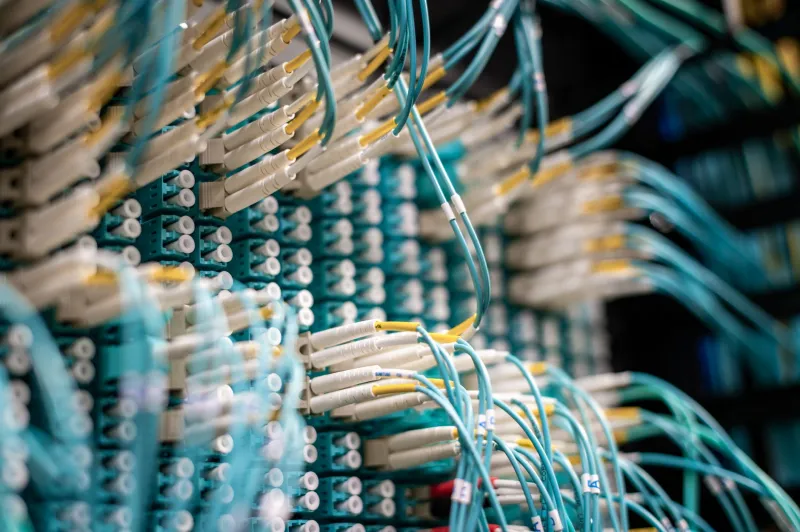
NTT, Japan's dominant telecommunications provider, was directed to extend fiber-optic lines into communities that private market logic would have overlooked. Subsidies flowed to municipal governments that partnered with providers or built their own community fiber networks. In some prefectures, local governments became internet service providers themselves, operating networks as public utilities rather than profit centers.
The policy framework also encouraged competition at the infrastructure layer while allowing multiple service providers to ride the same physical lines — a model that kept consumer prices low even as speeds climbed. By the mid-2010s, Japan consistently ranked among the top nations globally for average broadband speeds, and that ranking extended well beyond Tokyo and Osaka.
What This Means on the Ground in Regional Japan
In practical terms, moving to a regional Japanese town today means entering a connectivity environment that would surprise most Americans accustomed to rural or even suburban internet service. Prefectures like Nagano, Tottori, and Fukui — none of which would be described as urban centers — routinely offer residential fiber plans delivering 1 Gbps download and upload speeds at monthly costs between 4,000 and 6,000 yen, roughly $25 to $40 USD at current exchange rates.
Installation timelines are short. Customer service is structured. And the infrastructure itself — buried conduit, protected lines, redundant routing — is built to withstand the seismic and weather events that Japan's geography regularly produces. This is not incidental. Engineers designed these networks with resilience as a core requirement, not an afterthought.
For the American remote worker whose productivity depends on video conferencing, cloud-based collaboration tools, and reliable uptime, these are not minor amenities. They are professional prerequisites. And Japan's regional towns deliver them consistently.
The Nomad Community Is Taking Notice
Within international remote work communities, Japan's regional internet advantage has become an increasingly discussed topic. Online forums dedicated to location-independent professionals feature threads comparing upload speeds from Matsumoto to those from rural Vermont or eastern Tennessee. The results are rarely flattering to the American side of the comparison.
Several organized digital nomad communities have begun identifying specific Japanese towns as connectivity-certified destinations — locations where infrastructure has been independently verified to meet the demands of professional remote work. Shimane Prefecture, often cited for its depopulation challenges, has actively marketed its fiber infrastructure as part of broader relocation incentive packages targeting foreign professionals. The prefecture's "Chiiki Miryoku" (regional appeal) programs include subsidized housing, community integration support, and explicit documentation of available internet service tiers.
Nagano, benefiting from infrastructure investments that preceded and followed the 1998 Winter Olympics, presents a particularly compelling case. Mountain towns that might appear remote on a map are frequently served by the same fiber backbone that runs through the prefecture's urban centers. A graphic designer working from a farmhouse in the Azumino valley may well enjoy faster internet than a colleague operating from a shared office in rural Georgia.
The Policy Lesson Hiding in Plain Sight
Observers of Japanese infrastructure policy point to a straightforward principle underlying the country's regional connectivity success: the decision to treat broadband as essential public infrastructure rather than a discretionary consumer product. When governments frame connectivity in those terms, the funding mechanisms, regulatory structures, and deployment timelines all change accordingly.
The United States has taken tentative steps in this direction through programs like the USDA's ReConnect initiative and the Infrastructure Investment and Jobs Act's broadband provisions. Whether those investments will meaningfully close the gap with countries like Japan remains to be seen. The legislative intent is present; the execution across rural geographies is a longer-term project.
In the meantime, American professionals who need reliable connectivity and prefer not to wait for domestic infrastructure to catch up are finding that Japan's regional towns offer an immediate alternative — one that combines professional-grade internet with affordable housing, genuine community engagement, and a quality of life that urban environments rarely replicate.
Practical Considerations for the Connectivity-Conscious Relocator
For Americans seriously evaluating a move to rural Japan with professional connectivity as a priority, several practical steps are worth taking before committing to a specific location. Municipal government websites in Japan — often available in basic English or navigable through translation tools — frequently publish information about available service providers and infrastructure types. Organizations like the Japan IT Association and various prefecture-level business development offices can provide more detailed assessments.
Visiting a prospective town before signing a lease allows direct verification. Local community centers, libraries, and municipal offices can typically provide speed test results or refer prospective residents to neighbors willing to share their connectivity experience. In most regional Japanese towns, this kind of direct community inquiry is welcomed rather than viewed with suspicion — a cultural characteristic that itself distinguishes the experience from navigating American rural real estate markets.
The connectivity advantage that Japan's regional towns hold is real, documented, and increasingly recognized by the international professional community. For Americans weighing where to plant roots in an era of location-independent work, it represents one of the more compelling and least expected arguments for looking east.